Targeted brown recluse remediation focuses on systemic population reduction across nested indoor harborage sites rather than ineffective surface treatments. The brown recluse ( Loxosceles reclusa ) possesses long legs…
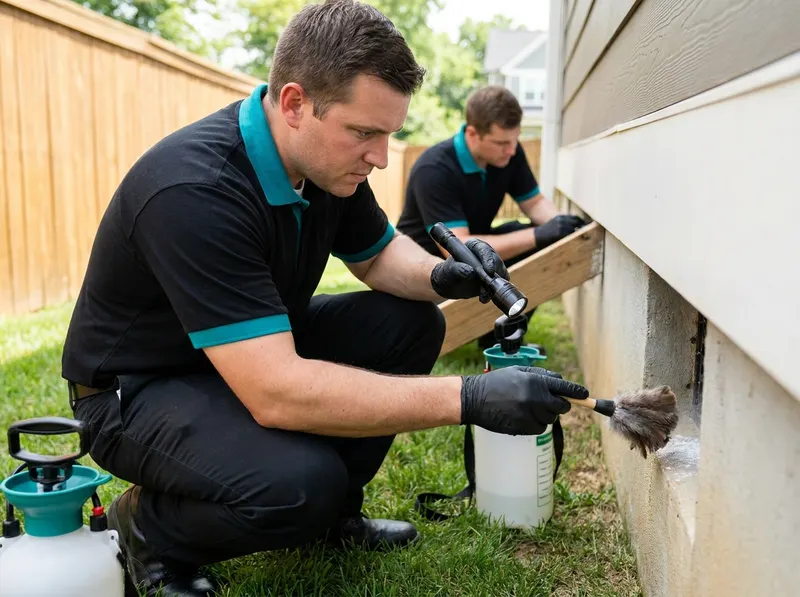
Targeted brown recluse remediation focuses on systemic population reduction across nested indoor harborage sites rather than ineffective surface treatments. The brown recluse (Loxosceles reclusa) possesses long legs that elevate its body above treated floor planes, rendering ordinary liquid perimeter sprays largely ineffective according to structural entomology guidelines from the University of Kentucky Department of Entomology. Effective control requires placing micro-particle desiccant dusts directly into dry, undisturbed voids such as wall cavities, subfloors, and framing joints where recluse spiders construct irregular retreat webs. Field research outlined by the UC Statewide IPM Program indicates that broadcast aerosol fogging often disperses recluse populations deeper into living quarters instead of killing them. BirchNova Exterminating relies on clinical, precision applications of desiccant dusts registered under the EPA Federal Insecticide, Fungicide, and Rodenticide Act, physically disrupting the waxy cuticular lipid layer of the spider's exoskeleton to cause rapid dehydration without off-gassing into interior residential air spaces.
Residential architecture across Davidson County creates distinct microclimates favorable to brown recluse establishment. Historic framing, tongue-and-groove subflooring, and dense attic insulation found in neighborhoods like East Nashville, Belmont-Hillsboro, and Germantown provide extensive interconnected dead-air voids. Properties near riparian zones such as the Cumberland River basin or wooded parcels around Percy Warner Park and Radnor Lake State Park face regular pressure from surrounding natural habitats. Crawlspace ventilation and moisture dynamics regulated under standards set by the Building Science Corporation directly influence secondary insect prey populations, such as silverfish and booklice, which sustain spider colonies. Technicians deploy low-profile unbranded vehicles for discreet on-site arrivals, conducting thorough acoustic and thermal imaging inspections to locate primary nesting clusters behind baseboards, beneath insulation batts, and inside utility chases without requiring family evacuation or disruptive furniture removal.
Achieving permanent resolution involves systematic habitat disruption and physical interception. A structured monitoring grid utilizing adhesive capture boards is positioned along room perimeters, heating vents, and structural sill plates, adhering to residential health standards published by the CDC NIOSH Safety Directory. Technicians apply targeted dusting through electrical outlet faceplates, plumbing penetrations, and structural weep screeds under structural application protocols endorsed by the National Pest Management Association. Sealing external access voids with copper mesh and silicone caulks, combined with humidity regulation aligned with ASHRAE Indoor Air Quality Standards, denies ongoing sustenance to the colony. While single-room perimeter powdering addresses an isolated sighting in a detached garage or utility closet, multi-zone structural treatments are necessary when specimens appear across multiple upper-story bedrooms or main living spaces, presenting a minor trade-off of requiring 48 hours of initial monitor logging to establish exact aggregation pathways.
Every job gets a firm, written price after a free on-site visit.
Tell us about your targeted brown recluse remediation job in Nashville and we'll send a clear, written quote, usually the same day.
 BirchNova Exterminating